Luck Pillars and Annual Pillars in BaZi: What’s the Difference?
A Luck Pillar covers a ten-year cycle; an annual pillar identifies a BaZi year. Learn how to distinguish both from your natal chart and check the relevant dates.


A Luck Pillar covers a ten-year cycle; an annual pillar identifies a BaZi year. Learn how to distinguish both from your natal chart and check the relevant dates.

2027 is the 丁未 (Dīng Wèi — Yin Fire Goat) year. But what does that really mean for you? Learn why the annual pillar gives context, not a complete personal forecast.
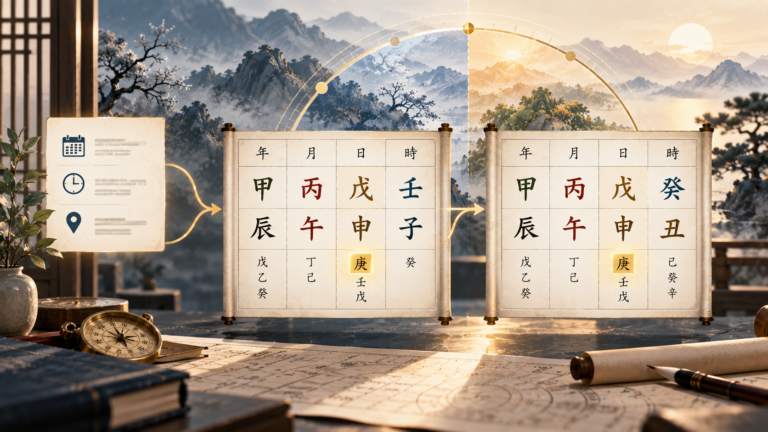
Two BaZi calculators can sometimes produce different Four Pillars from the same birth details. Here is what may cause the difference, why it matters, and when your previous interpretation may need another look.
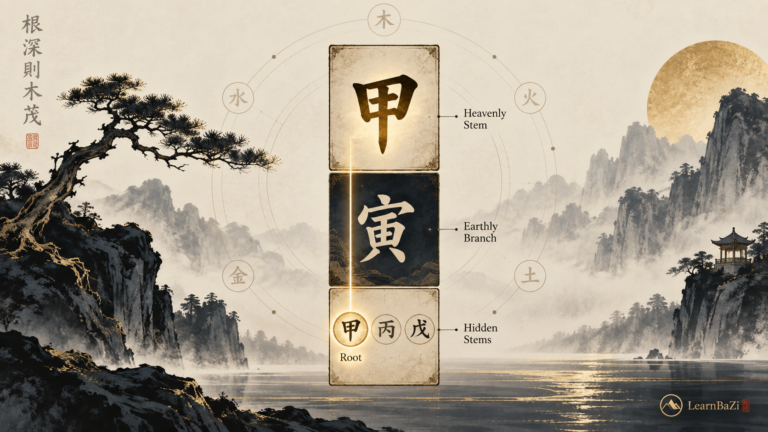
What does it mean for a Heavenly Stem to be rooted in BaZi? Learn how hidden stems provide roots, why root quality differs, and why having a root does not automatically make a stem strong.

Day Master strength is not simply a matter of counting elements. Learn why season, roots, support and analytical purpose can lead different BaZi methods to emphasise different factors.
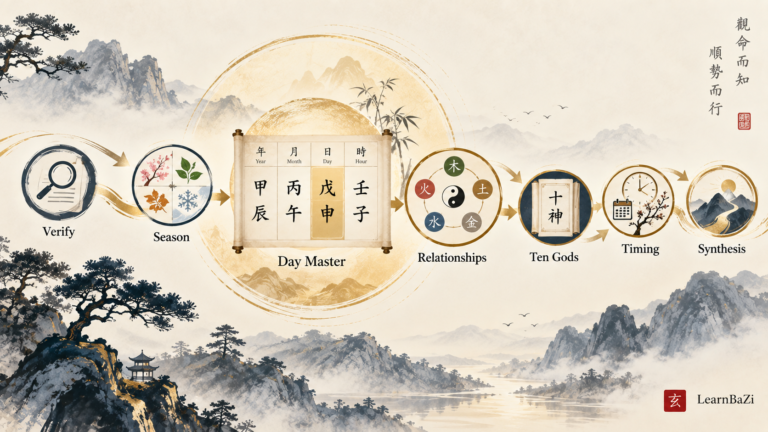
A BaZi chart contains many layers of information. Learn a systematic reading process that moves from chart verification and seasonal context to interactions, Ten Gods, synthesis and timing.
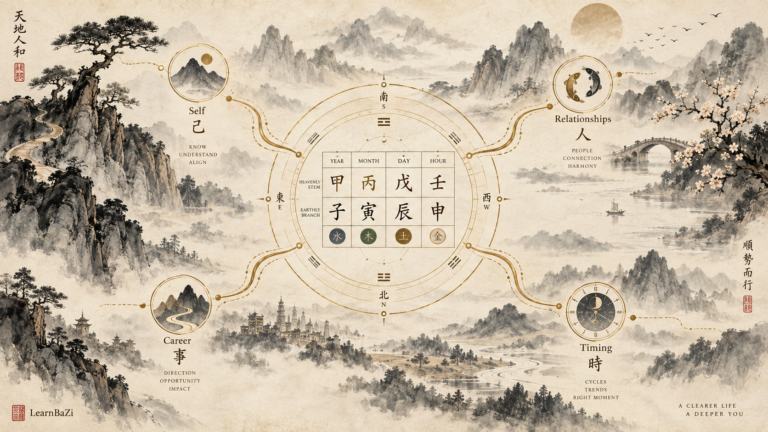
Why study BaZi? Learn how destiny analysis can be used as a framework for understanding patterns, tendencies and timing — and why it should not be treated as guaranteed prediction.
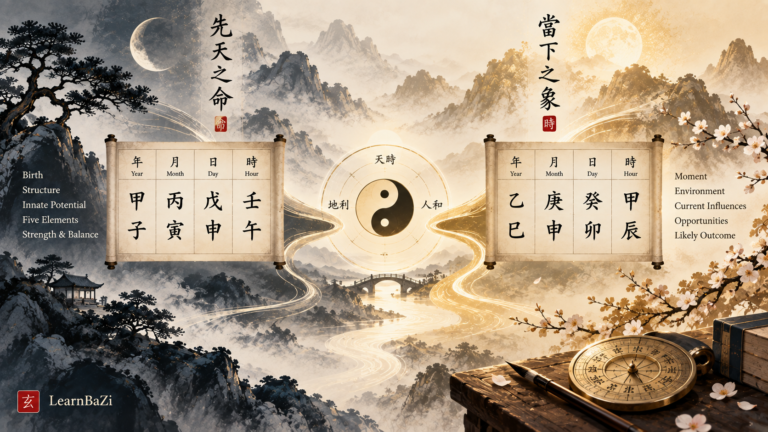
BaZi is primarily a natal-analysis system, but some practitioners also use question-based techniques. Learn where these methods differ and why the distinction matters.
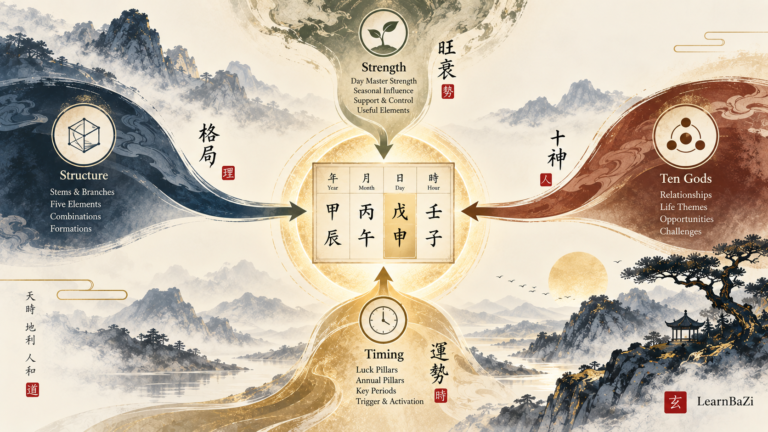
Different BaZi schools may use different reading methods. Learn how to compare them by purpose, consistency, internal logic and practical usefulness instead of asking which school is universally superior.